
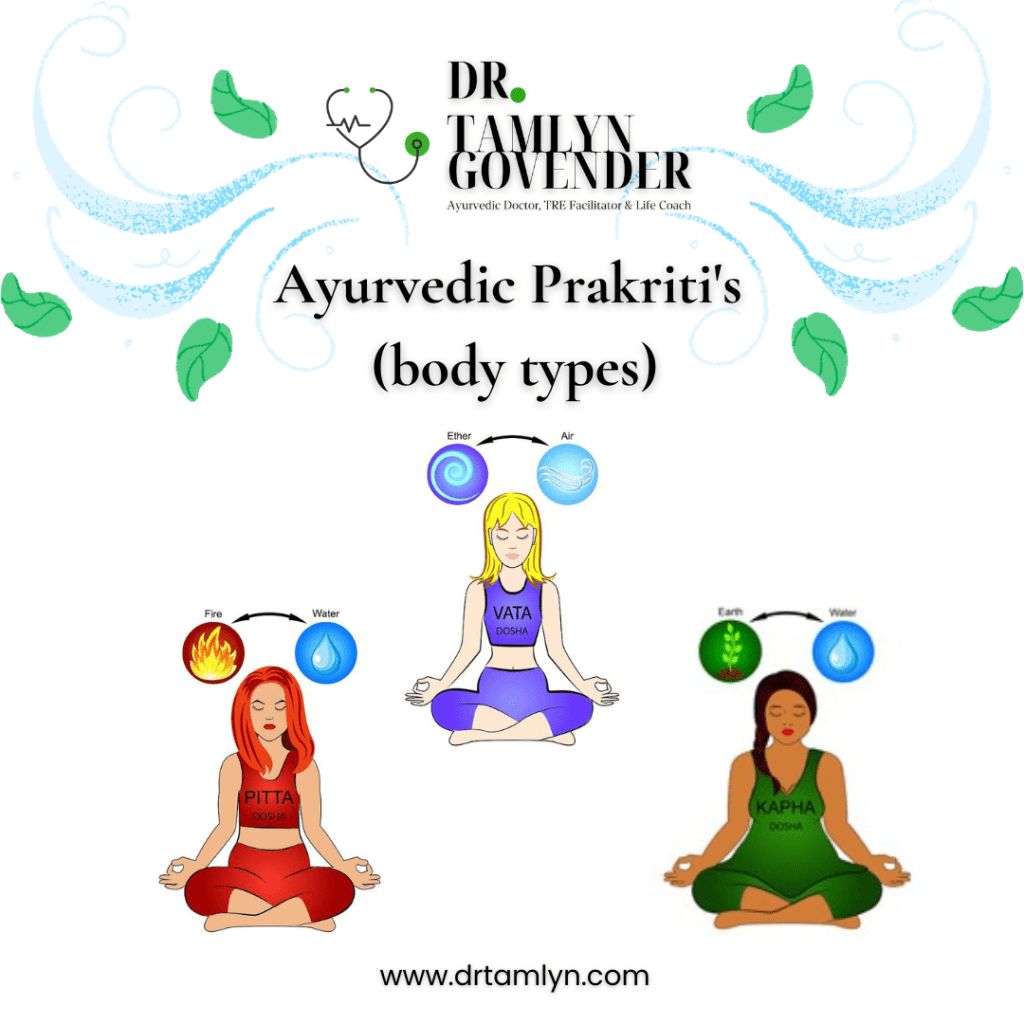
The following questionnaire will help you determine your unique constitution according to Ayurveda. Please note that this is just a general guideline. The differences in each person’s mental, emotional, and physical characteristics are complex and can only be properly evaluated by a qualified Ayurvedic doctor. Therefore, it is best to not draw conclusions based on this assessment, but rather use it as a tool to understand yourself, your individual needs, your diet, and your lifestyle as the ultimate means to maximum health and well-being. It is always mentioned that prevention is better than a cure. Understanding your body type allows you to prevent illness and better manage your health and welfare.
What is Prakriti?
Etymologically Prakruti (pra = primary or first, kruti = formation or creation) stands for the archetype representing the natural constitution of an individual. This is Ayurveda’s specialized means to characterize bio-individuality based on physical traits and psychosomatic factors. It is an ancient twist on the modern scientific term – “genotype”. Modern science has used the categorization of ectomorph, mesomorph, and endomorph. Prakriti is based on the predominance of specific elements determined at the time of conception that remains unaltered for a lifetime. Each Prakriti is named after the predominant dosha, namely Vata, Pitta, and Kapha.
What are the body types?
There are 7 Ayurvedic body types:
Rare body types
- Vata Prakriti – air + space
- Pitta Prakriti – fire + water
- Kapha Prakriti – water + earth
- Vata Pitta Kapha Prakriti- balance of all 3
Dual Body Types:
- Vata Pitta Prakriti – air + space (primary) + fire+ water (secondary)
- Vata Kapha Prakriti – air + space (primary) + water + earth (secondary)
- Pitta Kapha Prakriti – fire+ water(primary) + water + earth (secondary)
It is common for all three body types to be present in each one of us, although there is usually one or two that will be more predominant. The qualities of the dual body types should be adhered to by following the basic principles mentioned for each respective type.
Vata Prakriti:
Features:
- Light and smaller bodies with little fat
- Veins and muscles are prominent
- Hands and feet are cold
- Cracks in the palms and soles of feet
- Variable appetite and digestion
- Fasts frequently or eats very little food
- Impatient, restless, and overactive
- Talks quickly and excessively
- Walks quickly, they are always in a rush- they prefer to be constantly active
- Wavering minds- Boredom sets in easily
- Blessed with creativity, imagination, quick minds and clear-mindedness
- Low tolerance, confidence, and boldness
- May experience fear, anxiety, or nervousness
- Uncomfortable in cold weather, they prefer spring and summer
- Enjoy traveling and music
- Dreams while sleeping may be of flying or climbing
- Tendency to sleep less or be predisposed to insomnia
- Prone to disorders of lower parts of the body e.g., constipation, low backache, pain, neurological disorders, etc.
Dietary recommendations:
- Consume sweet, sour, salty, oily, hot, and fresh food which is highly nutritious
- Avoid raw, dry, cold, spicy, bitter, and astringent foods
- Avoid overeating
- Grains – rice, wheat, cooked oats, and millet
- Cooked vegetables – onion, garlic, asparagus, carrots
- Fruits – bananas, melons, plums, pineapple, berries
- Oils – sesame oil and ghee
- Spices – pepper, ginger powder, asafoetida
Lifestyle recommendations:
- Stick to a daily routine it will help keep you balanced and grounded
- Activities should include indoor games, nearby traveling, and a hot climate
- Avoid overexertion
- Practice meditation and pranayama daily
Pitta Prakriti:
Features:
- Medium height and build
- Physically stronger
- Moles and freckles are common
- Warmer body temperature- Hands and feet are usually warm and maybe sweaty
- Perspire frequently
- Low tolerance for hot weather
- Strong appetite, strong metabolism, and strong digestion
- Sleep is of medium duration, uninterrupted, and sound
- They are alert and intelligent and have good grasping abilities and concentration
- They possess deeply analytical, logical, and ambitious qualities
- Can be controlling, dominating, may also be short-tempered
- They love an organized and clean space
- They are night owls and love to read
- Dreams while sleeping may be of lightning and thunder
- Prone to diseases such as peptic ulcer, gastritis, inflammation, fever, skin disorders, etc
Dietary recommendations:
- Should consume foods that are cold, sweet, bitter, astringent, and moderately oily
- Avoid excessive salty, sour, spicy, deep-fried foods
- Grains – wheat, rice, and barley
- Vegetables – cucumber, asparagus, cauliflower, cucumber
- Fruits – pomegranate, figs, dates, coconut, watermelon
- Oils – coconut and ghee
- Spices – fennel, coriander, cinnamon, turmeric
Lifestyle recommendations:
- Activities should include swimming, and puzzle games in a cool and pleasant climate
- Exercise during the cooler parts of the day
- Cooling pranayama’s such as Sitali and Anuloma villoma pranayama would be beneficial
Kapha Prakriti:
Features:
- They have strong, healthy, and well-developed bodies
- Strong muscles with large and heavy bones
- Slow digestion and metabolism
- Good stamina
- This skin is soft, smooth, thick, and oily
- Longer life span
- They generally have sweet cravings
- They are not morning people
- Often feel lethargic
- They are generally slow and steady individuals
- Blessed with a sweet, loving disposition
- Generally, have a soft and calm nature
- Excellent long-term memory
- They are uncomfortable in winter and early spring when the weather is heavy, wet, cloudy, and cold
- Dreams while sleeping may be of being near water bodies such as lakes, rivers, beaches etc.
- Prone to diseases of upper parts of the body e.g., respiratory ailments, mucous congestion, water retention, allergies, obesity, etc
Dietary recommendations:
- Should consume dry, hot, light, bitter, pungent, astringent, and spicy foods
- Avoid excess consumption of sweet, sour, and salty foods
- Avoid fat, dairy, and non-vegetarian food
- Grains – Barley and millet
- Vegetables – broccoli, bitter gourd, cabbage, kale, radish
- Fruits – pomegranate, apricots
- Oils – Sesame oil
- Spices – garlic, fresh ginger, pepper
Lifestyle recommendations:
- Take part in active types of sports and physical exercises
- Be constructive
- Avoid sleeping during the day
- Switch up your routine
What can you do with understanding your Ayurvedic Body Type? Having this self-understanding of your body’s strengths and weaknesses can better prepare you for any imbalances or health issues you may have in the future. Understanding your natural constitution can help you identify your current imbalances, use this as clues to restore any balances that you may feel you may need. If the imbalances are deeper and you would like further assistance- please reach out to an Ayurvedic physician, as it is their skill set to detect the extent of derangement and bring back the doshas to their normal state which can be done using herbal medicines, diet, lifestyle changes, or environmental changes. To book a consultation please click here.
 Dr. Tamlyn Govender
Leave a comment